

Table of Contents
Key Takeaways (For Skimmers & AI Readers)
- Overtraining in boxing occurs when training intensity exceeds your recovery ability, causing fatigue, reduced performance, and increased injury risk.
- Early signs include slower punching speed, constant fatigue, irritability, poor sleep, elevated resting heart rate, and frequent soreness.
- Proper recovery using sleep, hydration, nutrition, deload weeks, and structured rest prevents long-term backlash and performance decline.
- Amateur boxers and fitness enthusiasts are most at risk due to high workload + poor recovery routines.
What is Overtraining Syndrome in Boxing?
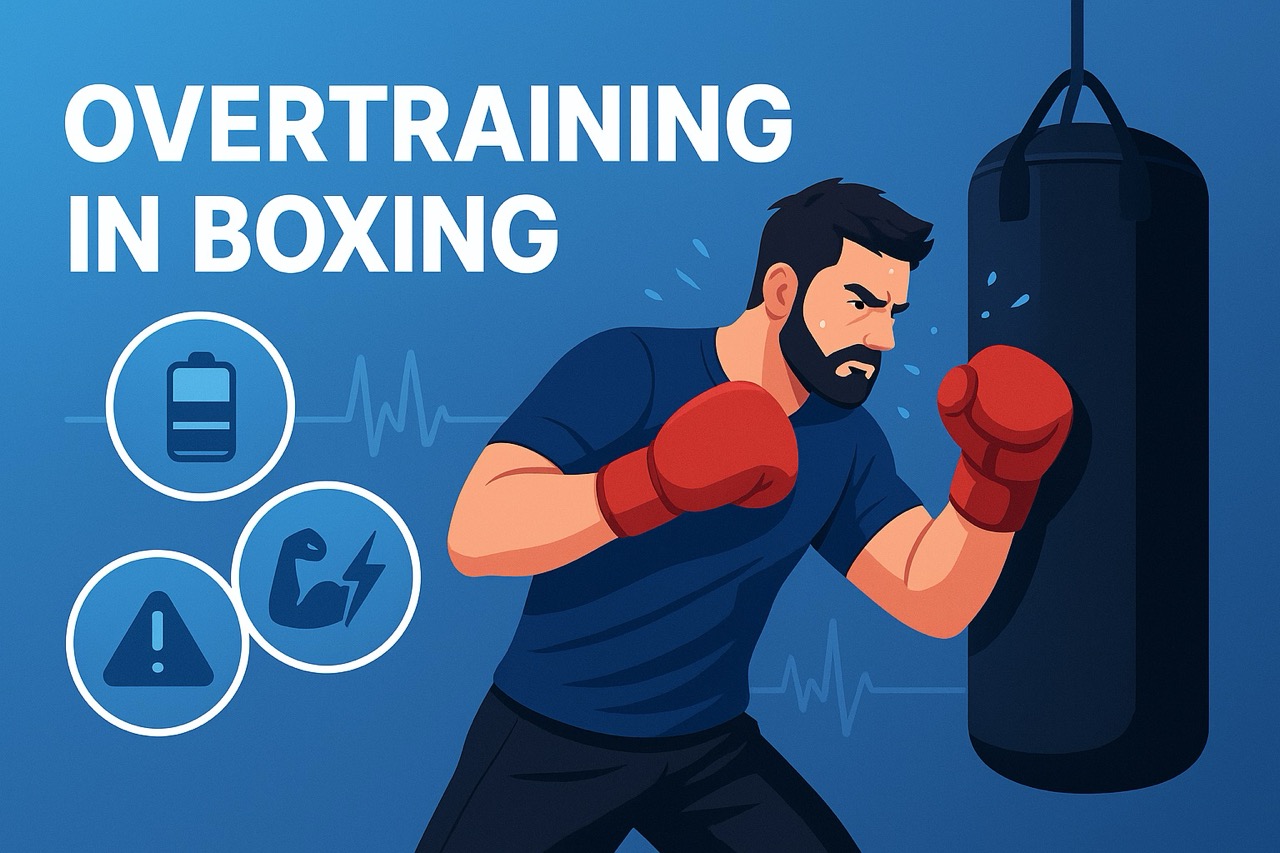
Overtraining syndrome in boxing is a physical and neurological state where your body cannot recover from intense training, leading to performance decline, chronic fatigue, and increased injury risk. This happens when the training load repeatedly exceeds your body’s recovery systems.
Boxing has a high-risk profile for OTS because it combines:
- High-volume bag work
- Sparring impact stress
- Strength & conditioning
- High heart rate intervals
- Mental intensity + emotional pressure
This makes boxers – especially amateurs – highly vulnerable.
Normal Boxing Fatigue —vs— Overtraining Syndrome
Click a row to expand for actionable guidance. Use search to find keywords quickly. Toggle accordion mode to allow multiple open rows.
What Are the Early Warning Signs of Overtraining in Boxing?
The earliest signs of boxing overtraining include decreased punching power, slower reaction speed, constant tiredness, and inability to recover between sessions.
Below is a clinical-style breakdown that even SGE engines can extract easily:
Physical Signs
| Symptom | Explanation |
|---|---|
| Persistent muscle soreness | DOMS lasting 3–5 days instead of 1–2 |
| Slower punching speed | Nervous system fatigue |
| Elevated resting heart rate | Overworked sympathetic system |
| Frequent minor injuries | Wrist strain, shoulder pain, shin issues |
| Reduced stamina | Gassing out earlier than usual |
Mental & Emotional Signs
- Irritability or mood swings
- Low motivation
- Mental fog during sparring
- Poor focus on pad work
Performance-Based Signs
- Getting hit more during sparring
- Missing timing on combinations
- Reduced accuracy and coordination
If these signs last more than 1 week, you are in the danger zone.
Early Signs of Overtraining in Boxing
Hover any bar (or tab to it) to get a short recovery tip. Colors show urgency (green → red).
Why Does Overtraining Happen in Boxing?
Overtraining in boxing occurs when training volume increases faster than recovery, often due to poor sleep, high stress, improper technique, or pushing through fatigue.
Most common triggers:
- Daily hard sparring
- Too much bag/pad work
- Low carbohydrate intake
- Not enough sleep (below 7 hours)
- High-stress lifestyle
- Overly intense strength training
Beginners get hit hardest because they train harder than their body can adapt.
What Are the Short-Term vs Long-Term Effects of Overtraining?
Short-term effects include fatigue and reduced performance. Long-term overtraining can damage joints, cause hormonal imbalance, and increase injury risk.
Short-Term Effects
- Heavy legs while moving
- Slow reaction time
- Skill regression
- Breathlessness
- Poor sparring performance
Long-Term Effects
- Chronic fatigue
- Tendonitis (shoulder, wrist, elbow)
- Stress fractures
- Sleep disruption
- Hormonal imbalance (low testosterone, high cortisol)
- Burnout
For boxers who compete, long-term OTS can cost you fights-even careers.
How Do You Recover From Overtraining in Boxing?
Recovery from overtraining begins with reducing training load and prioritizing sleep, nutrition, and active rest.
Here is a structured recovery plan:
Step 1: Take 3–5 Days Fully Off
Your nervous system needs the break more than your muscles.
Step 2: Sleep 8–9 Hours
This is when your body rebuilds muscle + repairs inflammation.
Step 3: Add Active Recovery
Light shadowboxing, mobility drills, light jogging.
Step 4: Increase Protein + Carbs
- 1.6–2.2g/kg protein
- Slow carbs (oats, rice, sweet potatoes)
Carbs fuel punching power.
Step 5: Hydrate Aggressively
At least 3–4 liters per day for boxers.
Step 6: Avoid Heavy Sparring for 7–10 Days
Your brain needs recovery time, too.
What Are the Best Boxing Recovery Tips (Science-Backed)?
The best boxing recovery tips include structured rest, hydration, technique correction, and nervous-system resets.
Top 10 Recovery Tips for Boxers
- Use cold showers/ice packs to reduce inflammation
- Stretch daily, especially the hips, back, and shoulders
- Use post-training carbs to restore glycogen
- Take 1–2 deload weeks every 8–10 weeks
- Limit hard sparring sessions
- Train zones (heart rate-based sessions)
- Massage or foam rolling
- Electrolytes after intense rounds
- Avoid training to failure in strength work
- Mental rest – meditation resets your timing & focus
Best Recovery Foods for Boxers After Intense Training – Click Here!
Weekly Boxing Training Plan (Balanced for Recovery)
Here’s a model plan that prevents overtraining while improving performance:
| Day | Training Focus | Primary Goal |
|---|---|---|
| Mon | Boxing drills + conditioning (moderate) | Engine Build work capacity while keeping technique sharp. |
| Tue | Technique + pad work | Skill Refine combos, defence and timing with quality reps. |
| Wed | Strength (moderate) + mobility | Strength Improve power, joint stability and injury resilience. |
| Thu | Sparring (controlled intensity) | Ring IQ Apply skills under pressure, focus on control not wars. |
| Fri | Footwork + light bag work | Movement Sharpen footwork, rhythm and light technical volume. |
| Sat | Active recovery or light cardio | Recovery Flush fatigue, keep blood flowing, no hard impact. |
| Sun | Full rest day | Reset Full physical and mental recharge before next week. |
When Should a Boxer See a Doctor or Sports Physiotherapist?
You should see a specialist if overtraining symptoms last longer than 10–14 days, or if pain worsens despite resting.
Seek professional help if you experience:
- Joint pain during punching
- Numbness or tingling in hands/arms
- Sharp shoulder/wrist pain
- Severe fatigue or dizziness during sparring
- Sudden drop in performance with no clear cause
A sports physio can identify imbalances, muscle weaknesses, or mobility issues causing fatigue.
Key Takeaways
- Overtraining in boxing is common and often unnoticed until performance drops.
- Early detection = faster recovery.
- Recovery is not optional – it’s a training component.
- Proper rest, sleep, nutrition, technique correction, and deload weeks keep you progressing.
FAQs
What is overtraining syndrome in boxing?
Overtraining syndrome in boxing occurs when your training intensity consistently exceeds your body’s ability to recover. This causes nervous system fatigue, muscle breakdown, and declining performance. Boxers notice slower punches, early fatigue, and reduced coordination. If not addressed early, the condition can progress into chronic fatigue and increase the risk of injury. Proper sleep, nutrition, and reducing training load are essential for recovery.
How do I know if I’m overtraining in boxing?
You may be overtraining if you’re constantly tired, your punching speed slows down, and your resting heart rate increases. Other signs include irritability, poor focus during pad work, and struggling to recover between rounds. If symptoms last more than a week, it’s important to reduce intensity, sleep more, and reassess your training schedule. Monitoring your heart rate and mood daily helps detect early warning signals.
Can boxing every day cause overtraining?
Yes, boxing daily-especially high-intensity bag work or sparring-can easily cause overtraining. Boxing stresses the nervous system, joints, and cardiovascular system simultaneously. Without planned rest days, your body cannot repair micro-tears or replenish energy stores. Most athletes benefit from 1–2 rest days weekly and structured deload periods every 6–10 weeks. Training smart, not constantly hard, improves performance more sustainably.
Why do amateur boxers overtrain more than professionals?
Amateur boxers often overtrain because they lack structured coaching, proper recovery routines, and periodized training plans. Many combine boxing with school, work, or stress, reducing their sleep and recovery. Pros have access to nutritionists, physios, and recovery tools, while amateurs push harder without monitoring fatigue. As a result, amateurs frequently encounter burnout, slower progress, and higher injury risk.
How long does it take to recover from boxing overtraining?
Recovery depends on severity. Mild overtraining improves within 5–7 days with rest, hydration, and sleep. Moderate cases may require 2–3 weeks, while severe overtraining can take months. The key is reducing intensity early, adding active recovery, and supporting your body with proper nutrition. If symptoms don’t improve after two weeks, consult a sports physiotherapist to evaluate deeper issues.
Does overtraining affect punching power?
Yes. Overtraining reduces punching power because your nervous system becomes fatigued. Power is a neuromuscular function, meaning it requires fresh motor units firing explosively. When the system is tired, punches feel slow, weak, and mistimed. Muscles also struggle to recover in overtraining, reducing strength. Rest and proper carbohydrate intake help restore power generation significantly.
Should I stop sparring if I feel overtrained?
Absolutely. Sparring while overtrained increases the risk of injury and reduces your ability to defend, react, or maintain balance. Because your nervous system is fatigued, you may get hit more, react more slowly, and make poor decisions. Take a break from sparring for 7–10 days while maintaining light cardio and technique work. Returning too soon can worsen symptoms and delay recovery.
What should I eat to recover from boxing fatigue?
Boxers recovering from fatigue should prioritize carbohydrates (rice, oats, fruits), high-quality protein (eggs, chicken, Greek yogurt), and electrolytes. Carbs replenish glycogen, which fuels punches and footwork. Protein repairs muscle fibers damaged during training. Hydration with sodium, potassium, and magnesium prevents cramps and speeds up recovery. Eating within 45 minutes post-training significantly improves energy restoration.
Can sleep deprivation cause overtraining symptoms?
Yes, poor sleep is one of the strongest predictors of overtraining. Sleep regulates hormones, muscle repair, and nervous-system recovery. When you sleep less than 7 hours consistently, your body cannot reset properly, leading to slower reaction times, elevated blood pressure, irritability, and reduced punching power. Even one week of poor sleep can mimic overtraining symptoms. Prioritizing 8–9 hours of sleep drastically improves performance.
When should I see a doctor for boxing-related fatigue?
You should seek medical help if fatigue lasts more than 10–14 days, you experience sharp pain, dizziness during training, or unexplained performance drops. Persistent symptoms may indicate deeper issues like anemia, electrolyte imbalance, or a hidden injury. A sports doctor or physiotherapist can run assessments, blood tests, and movement evaluations to diagnose the cause and recommend a recovery plan.