

Table of Contents
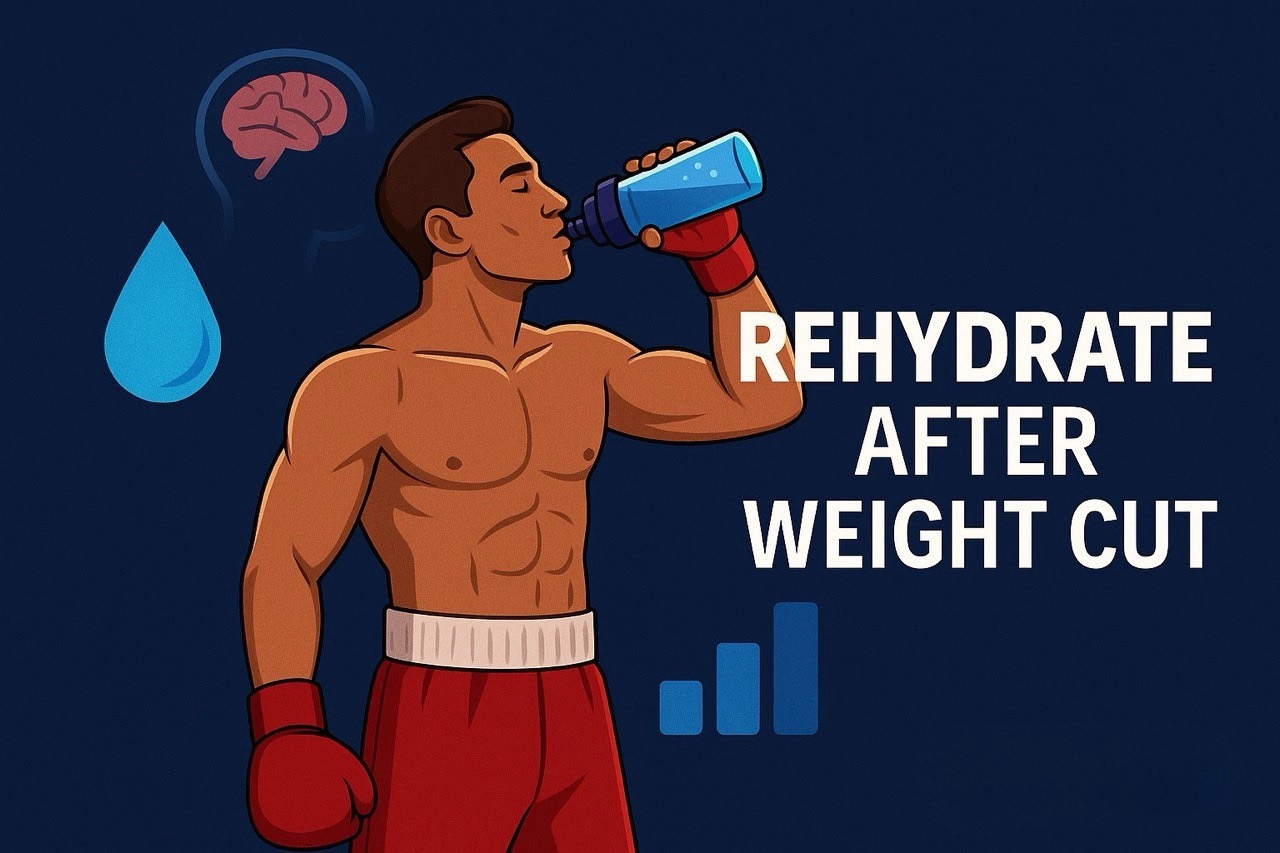
Weight cutting is a tradition in boxing, but dehydration is the #1 hidden threat that ruins performance before a punch is even thrown.
Every fight week, boxers chase the scale:
- Saunas
- Plastic sweatsuits
- Salt restriction
- Fluid cutting
Yes – it may help make weight…
But it destroys punching power, brain protection, stamina, and split-second reactions.
Before entering the ring, dehydration can already put a boxer at a disadvantage.
Why Boxers Cut Weight Before Fights
The idea is simple:
Weigh less → Fight bigger opponents → Higher advantage (reach, power, ranking opportunities)
But this advantage becomes a disadvantage if dehydration:
❌ Slows muscle firing
❌ Reduces brain fluid (higher KO risk)
❌ Weakens the nervous system
❌ Drops endurance dramatically
A huge problem: Many amateurs and even pros don’t rehydrate properly after weigh-ins.
What Dehydration Does to a Boxer’s Body ?
| Performance Impact | Why It Happens |
|---|---|
| Slow punches + weak power | Less muscle fluid = less electrical conduction |
| Poor timing & accuracy | Brain dehydration = slower reaction time |
| Early gassing out | Thickened blood → oxygen transport decreases |
| Higher concussion risk | Brain “floats” less = more impact |
| Muscle cramps & stiffness | Electrolyte imbalance blocks muscle contractions |
➡ A dehydrated boxer becomes easier to hit, easier to drop, and slower to respond.
Electrolyte Imbalance: The Real Fight-Night Killer
Water alone isn’t enough.
When sweating heavily, boxers lose:
| Electrolyte | What It Controls | Low Levels Cause |
|---|---|---|
| Sodium | Fluid balance | Cramps, dizziness |
| Potassium | Muscle firing | Weakness, irregular heartbeat |
| Magnesium | Nerve conduction | Tremors, muscle twitch |
| Chloride | Acid–base balance | Nausea, fatigue |
Without electrolytes, water doesn’t enter muscles & brain properly.
✘ Drinking only water after a weigh-in → creates “water poisoning” effect
✔ Replacing electrolytes first → restores full performance
Early Warning Signs of Dehydration in Boxers
Physical:
- Dry mouth + thick saliva
- Cramping during footwork
- “Dead arms” while punching
- High heart rate at low effort
- Dark yellow urine
Performance:
- Slow defensive reactions
- Sloppy technique during sparring
- Early fatigue in pad rounds
⚠ If any symptoms start during warm-up → you have already cut too much water.
How Much Water Can a Boxer Safely Cut?
Sports science guidelines:
| Experience Level | Max Safe Cut (Water Weight) |
|---|---|
| Amateurs | 1–3% bodyweight |
| Professionals | 5–8% bodyweight only under expert supervision |
Example: A 70 kg boxer
3% = 2.1 kg (safe amateur limit)
7% = 4.9 kg (pro + medical team required)
More than that enters danger territory:
- Heat stroke
- Kidney stress
- KO vulnerability
Fight Week Hydration Strategy (Safe Cut Plan)
| Day | Focus | Water Strategy |
|---|---|---|
| Mon–Wed | Water load | 6–8 L/day + electrolytes |
| Thu | Reduce fluids | 4 L/day |
| Fri (morning) | Light cut | 1–2 L/day + salt |
| Weigh-in Day | Controlled dehydration | Small sips only |
| Post-Weigh-in | Rehydration protocol | Oral hydration drinks |
📌 Never sit in a sauna with no fluid strategy – fastest way to damage performance.
What & When to Drink (Fight Week + Fight Day)
| Time | What to Drink |
|---|---|
| Post-weigh-in (first 4 hrs) | Electrolyte formula: sodium + potassium + carbs |
| Night before the fight | Water + balanced salts |
| 1–2 hrs pre-fight | Small sips, ~500–700 ml fluids |
| During warm-up | Electrolyte sips only |
| After fight | Water + protein + carbs |
Best hydrating electrolyte options:
- ORS (Oral Rehydration Solutions)
- Coconut water + pinch of salt
- Sports drinks with 600–800 mg of sodium per liter Ref. click
Common Weight-Cut Mistakes Boxers Make
| Mistake | Fix |
|---|---|
| Cutting water too early | Water load before reducing |
| Removing all salt | Controlled sodium cycling |
| Drinking only water post-weigh-in | Add electrolytes + carbs |
| No hydration tracking | Monitor urine color & daily weight |
| Hard sparring during dehydration | Only light movement while dry |
Safe Boxing Dehydration Checklist for Boxers
✔ Monitor urine color daily
✔ Weigh yourself before & after sessions
✔ Post-weigh-in: electrolytes first, water next
✔ Avoid sauna unless medically supported
✔ Track resting heart rate – big warning sign
✔ Don’t chase unrealistic weight classes
📌 If punching power drops in training → STOP CUT IMMEDIATELY
Visual guide to dehydration risk for body, brain, blood and heat stress — designed to stay readable on mobile, tablet and desktop.
Body Dehydration Impact Map
Shows which systems feel dehydration first and how severity scales as fluid loss increases.
- Core systems (heart / brain) are most sensitive to rapid fluid loss.
- Muscle performance drops quickly with even mild dehydration.
- Head symptoms (fog, dizziness) are early warning signs.
Brain Concussion Risk vs Fluid Loss
As dehydration increases, the brain has less “cushioning” fluid and neck muscles fatigue faster, raising concussion risk.
Combine weight-cut size with impact sport exposure: bigger cuts + more head contact ⇒ be more conservative with both weight and game style.
Blood Viscosity vs Hydration Status
Conceptual “curve” showing how blood thickness trends as dehydration increases.
• Rapid swings (cut → rehydrate) stress vessels and the cardiovascular system.
Heat Stress Scale by Intensity
Relates session intensity + environment to relative heat stress when fluid is not fully replaced.
In hotter, more humid environments, even small fluid deficits can push you into the high-stress zone quickly, especially after a weight cut.
Conclusion
A great fighter isn’t just skilled – they’re well-hydrated.
Cutting weight smartly keeps your brain protected, your punches sharp, and your legs fresh in Round 6.
Your goal is not just making weight –
It’s winning after making weight.
Read More:
1. WHY BOXING-INSPIRED FITNESS IS THE BEST WORKOUT FOR FAT LOSS & ENDURANCE
2. BEST RECOVERY FOODS FOR BOXERS AFTER INTENSE TRAINING
Boxer’s Dehydration & Weight Cut – FAQs
Evidence-based answers on boxing dehydration, safe weight cuts and hydration for boxers before and after the weigh-in.
1 What happens if a boxer fights dehydrated?
A dehydrated boxer loses fluid around the brain and inside the muscles. That means slower reactions, weaker punches and less shock absorption with every shot. You gas out earlier, your defence falls apart and your chin becomes easier to crack – all before your skills even matter.
2 How do boxers stay hydrated while cutting weight?
Smart weight cuts use water loading, controlled salt intake and timed reductions, not random fluid restriction. Most pro fighters follow a plan that: loads water early in the week, adjusts sodium instead of removing it completely, and uses small, planned dehydration close to the scale – never all week.
3 How much water weight can boxers safely lose before a fight?
For amateur boxers, keep cuts around 1–3% of bodyweight. For professionals, up to 5–8% may be used but only with a performance nutritionist and medical oversight. Once you push past that, you enter a zone of KO vulnerability, kidney stress and heat stroke risk.
4 Is dehydration really that dangerous in boxing?
Yes. In a dehydrated state, the brain literally has less fluid cushioning it inside the skull. Combine that with thicker blood and faster heart rate and every hard punch becomes more dangerous. Dehydration doesn’t just make you tired – it makes every shot harder to recover from.
5 What should boxers drink after weigh-ins?
Start with electrolytes + carbs, not plain water. A good post-weigh-in drink includes: sodium, potassium, some magnesium and 20–40 g of fast carbs per serving. ORS solutions, higher-sodium sports drinks or a custom mix work best – sip steadily over the first 2–4 hours instead of chugging a full bottle at once.
6 Do sweatsuits and saunas hurt boxing performance?
Used blindly, yes. Aggressive sauna or sweatsuit sessions strip fluid and electrolytes from your body faster than you can replace them. You end up on the scale lighter, but in the ring with slower reactions, weaker legs and a nervous system that’s already fried before Round 1.
7 How can I tell if I’m dehydrated during boxing training?
Key red flags are: dead arms, early cramping, unusually high heart rate, dark urine, dizziness or “foggy” reactions. If you feel tired in warm-up or lose sharpness in early rounds, you’re already behind on hydration and your weight cut strategy is too aggressive.
8 Why is drinking only water after weigh-ins a mistake?
Plain water dilutes your sodium levels and can make you feel bloated, sluggish and weak. Without sodium and other electrolytes, water doesn’t stay in the bloodstream or muscles effectively. That’s why FitPunch always recommends an electrolyte-first strategy for rehydration, then water.
9 How long does proper rehydration take after a weight cut?
For small cuts you can feel close to normal in 4–6 hours with a good plan. Bigger cuts (5–8% bodyweight) can take 12–24 hours for blood volume, electrolytes and gut comfort to fully recover. If your event gives you only a few hours between weigh-in and fight, extreme cuts are simply not worth the risk.
10 What’s the best hydration strategy for amateur boxers?
For amateurs, the best “strategy” is small cuts and big consistency: stay close to your fighting weight year-round, keep daily water and electrolytes steady, and avoid drastic sauna sessions. Your goal isn’t just to make weight once – it’s to show up sharp, explosive and safe every single fight night.