

Boxing looks simple from the outside. Two people. Gloves. A ring. A bell.
But inside the skull, something far more complex is happening.
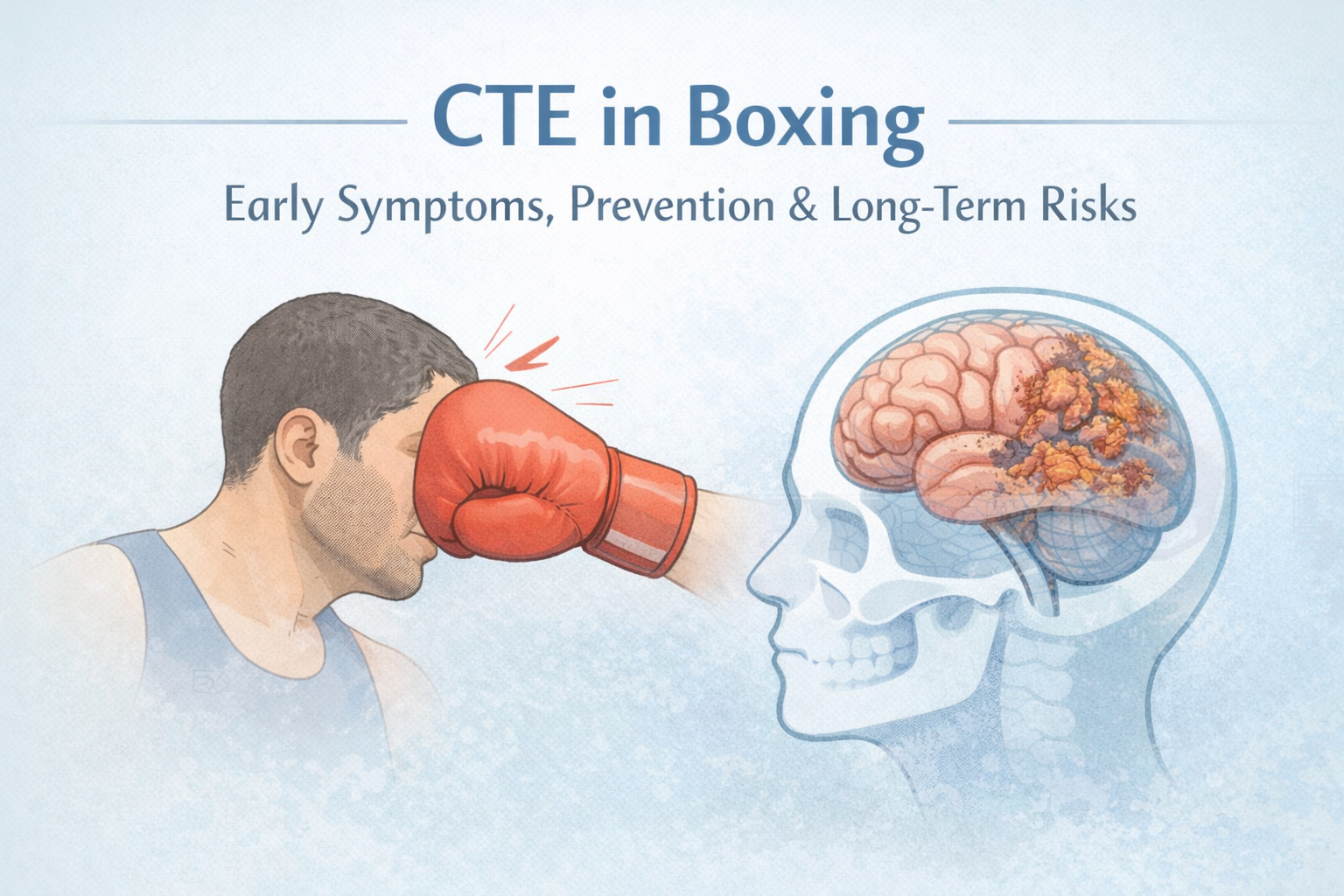
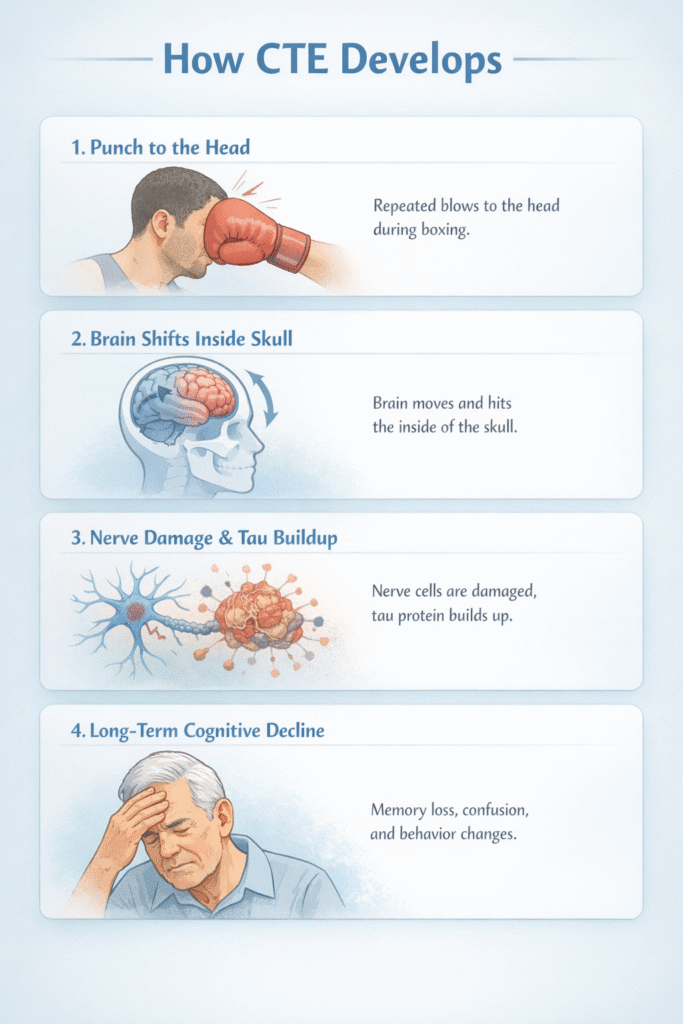
Every punch that lands on the head makes the brain move inside the skull. It does not matter if the punch causes a knockout or just a mild shake. The brain still moves. Over time, that movement can leave lasting damage.
This is where CTE in boxing enters the conversation.
Many boxers, trainers, parents, and fitness enthusiasts hear this term and feel confused. Some feel scared. Others ignore it completely. Both reactions are common. And both are risky.
This article explains CTE in boxing clearly and honestly. No medical jargon. No fear-mongering. Just facts, examples, and practical understanding.
What is CTE in Boxing?
CTE stands for Chronic Traumatic Encephalopathy.
In simple words, it is a long-term brain condition caused by repeated head impacts. These impacts can come from punches, sparring sessions, knockdowns, or even constant jabs that shake the head.
Think of the brain like jelly inside a closed container.
Shake the container once. The jelly moves but settles.
Shake it again. And again. And again.
Over time, the jelly breaks apart.
That is similar to what happens in CTE.
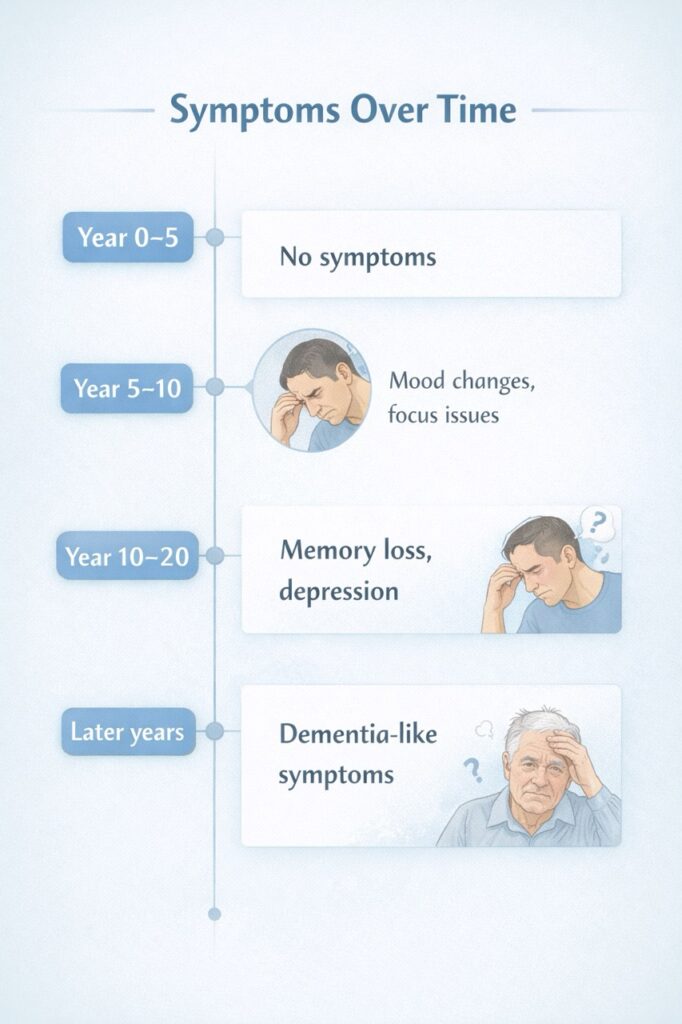
CTE is not caused by one single punch. It develops slowly. It builds silently. And symptoms often appear years after boxing has stopped.
This is why many retired boxers feel confused when problems show up later in life. They do not connect today’s memory loss or mood changes to punches taken years ago.
Why Boxing Carries a Higher Risk of CTE
Boxing is unique among sports.
The goal is not just to score points.
The goal is to hit the opponent’s head and body repeatedly.
This matters.
In boxing, the brain faces:
- Direct punches to the head
- Repeated sparring rounds
- Sub-concussive blows that do not cause symptoms
- Occasional concussions and knockouts
A boxer may not feel injured after a sparring session. But the brain still absorbs force.
It is like tapping a glass lightly. One tap does nothing.
Tap it a hundred times. Tiny cracks start to form.
Most boxers focus on visible injuries. Cuts. Swelling. Broken bones.
Brain damage is invisible. That makes it easy to ignore.
CTE vs Concussion: Why People Get Confused
Many people think CTE and concussion are the same thing. They are not.
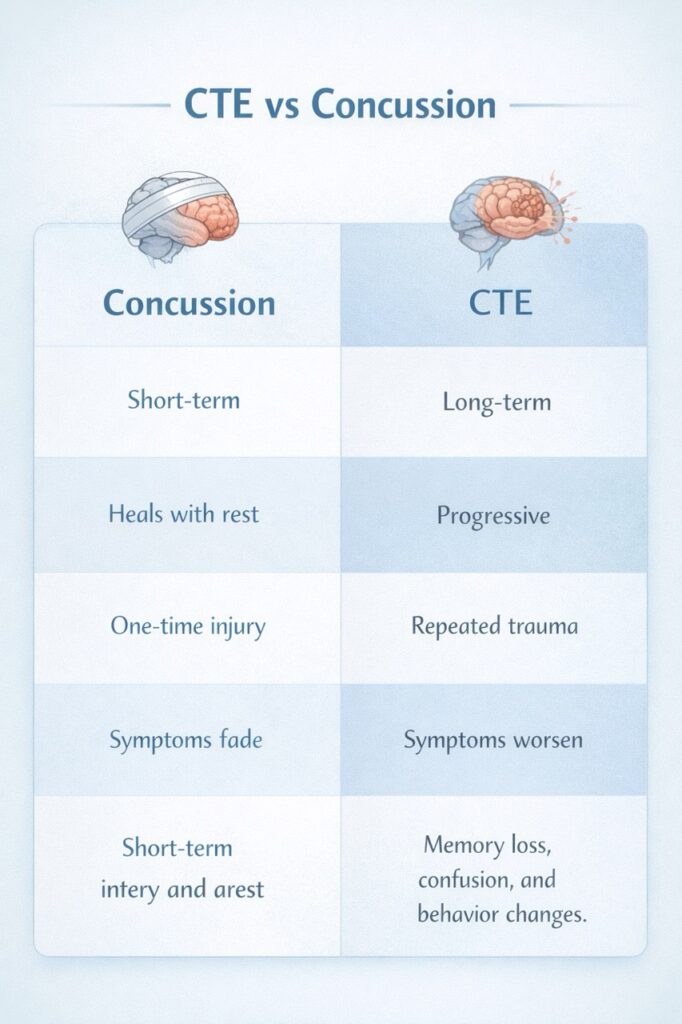
A concussion is a short-term brain injury. Symptoms may include headache, dizziness, confusion, or nausea. With rest and proper care, many people recover fully.
CTE is different.
CTE is:
- Long term
- Progressive
- Linked to repeated trauma
- Not reversible
A concussion is like spraining an ankle.
CTE is like arthritis that develops after years of damage.
You can have many concussions and never develop CTE.
You can also develop CTE without obvious concussions.
That is what makes it dangerous.
How CTE Develops Inside the Brain
Inside the brain are billions of nerve cells. These cells communicate using electrical signals. When the head is hit, these cells stretch and twist.
Repeated trauma leads to:
- Damage to nerve connections
- Abnormal buildup of tau protein
- Breakdown of normal brain structure
The tau protein acts like garbage that does not get cleaned.
Over time, it spreads.
And it blocks healthy brain function.
This process is slow. That is why symptoms often appear later.
Early Symptoms of CTE in Boxers
Early symptoms are often mild. And that is the problem.
Most boxers ignore them.
Common early signs include:
- Forgetting small things
- Trouble focusing
- Mood swings
- Irritability
- Short temper
- Anxiety
- Low motivation
A boxer might say,
“I am just stressed.”
“I am tired.”
“This is normal.”
But when these symptoms continue or worsen, they deserve attention.
Ignoring early symptoms is like ignoring a small leak in a pipe.
At first, it seems harmless.
Later, the damage is expensive and permanent.
Memory Loss and Cognitive Problems
Memory issues are one of the most talked-about effects of CTE in boxing.
This does not mean forgetting everything overnight.
It often starts small:
- Forgetting names
- Misplacing items
- Repeating the same questions
- Trouble learning new things
Over time, thinking becomes slower. Decision-making becomes harder. Conversations feel tiring.
Some boxers describe it like walking through fog.
Thoughts feel heavy. Focus slips easily.
Emotional and Behavioral Changes
CTE does not only affect memory. It affects emotions.
Many boxers with brain damage report:
- Sudden anger
- Depression
- Emotional numbness
- Impulsive behavior
This can hurt relationships. Families may notice personality changes long before the boxer does.
Imagine a calm person suddenly becoming aggressive.
Or a confident person becoming withdrawn.
These changes are not a character flaw.
They are symptoms of brain injury.
Advanced and Late-Stage Symptoms of CTE
As CTE progresses, symptoms become more serious.
Later stages may include:
- Severe memory loss
- Dementia-like symptoms
- Speech problems
- Balance issues
- Tremors
- Parkinson-like movement problems
At this stage, daily life becomes difficult.
Simple tasks feel overwhelming.
Independence may be lost.
This is why awareness matters early.
Does Every Boxer Get CTE?
No.
This is an important point.
Not every boxer develops CTE.
Risk depends on many factors:
- Total years of boxing
- Number of fights
- Sparring intensity
- Recovery time
- Genetics
- Overall brain health
Think of sun exposure.
Some people get skin damage easily. Others do not.
Boxing works the same way.
But the risk increases with exposure. That cannot be ignored.
Why Sparring Matters More Than Fights
Many boxers worry only about fight nights.
But sparring causes more total head impact over a career.
A boxer may fight ten times a year.
But spar three to five times a week.
That adds up.
Hard sparring without protection is one of the biggest contributors to long-term brain damage in boxing.
CTE in Amateur and Youth Boxing
CTE is not limited to professionals.
Amateur boxers and young athletes can also face risk.
Young brains are still developing. Repeated head trauma during this phase may cause more serious damage.
Parents often ask,
“Is boxing safe for my child?”
There is no simple answer. But safety measures matter more than talent at early ages.
Can CTE Be Diagnosed in Living Boxers?
Currently, CTE cannot be definitively diagnosed while a person is alive.
This frustrates many people.
Doctors rely on:
- Medical history
- Cognitive tests
- Neurological exams
- Behavioral observation
Brain scans may show damage, but they cannot confirm CTE with certainty.
This is why prevention is more important than diagnosis.
Prevention: Can Boxers Reduce the Risk of CTE?
Yes. Risk can be reduced.
CTE is not fully preventable, but damage can be limited.
Practical steps include:
- Reducing hard sparring
- Using proper headgear in training
- Following strict concussion protocols
- Taking long recovery breaks
- Avoiding fighting while injured
- Ending careers earlier
Think of it like saving money for retirement.
Small decisions today protect the future.
The Role of Rest and Recovery
Rest is not weakness.
The brain needs time to heal after trauma. Fighting or sparring too soon increases damage.
Recovery is like letting a cracked wall dry before adding weight.
Ignore it, and the structure collapses.
Medical Monitoring for Boxers
Regular medical checkups matter.
Boxers should undergo:
- Neurological exams
- Cognitive assessments
- Balance and coordination tests
These tests do not diagnose CTE.
But they catch early warning signs.
Early action can slow damage.
Famous Cases and Public Awareness
Many legendary fighters later struggled with neurological problems. These stories brought global attention to boxing brain damage.
Their experiences serve as warnings, not myths.
They remind the boxing world that success in the ring can come with hidden costs.
When Should a Boxer Stop Fighting?
This is a hard question.
There is no universal answer.
But warning signs include:
- Multiple concussions
- Declining performance
- Personality changes
- Persistent headaches
- Memory issues
Stopping early can mean saving decades of quality life.
Life After Boxing and Brain Health
Retirement does not end brain risk.
Former boxers should:
- Stay mentally active
- Exercise regularly
- Manage stress
- Seek medical help for symptoms
The brain can adapt. But it needs support.
Common Myths About CTE in Boxing
Myth 1: Only knockout artists get CTE
Reality: Repeated small blows matter too.
Myth 2: Headgear fully protects the brain
Reality: Headgear protects skin, not brain movement.
Myth 3: Symptoms appear immediately
Reality: They often appear years later.
Why Awareness Matters More Than Fear
CTE discussions should not scare people away from boxing.
They should educate.
Boxing has discipline, fitness, confidence, and skill.
But like driving a car, safety rules matter.
Ignoring risk does not make it disappear.
Conclusion
CTE in boxing is real.
But it is not a death sentence.
Awareness changes outcomes.
Smart training reduces damage.
Early action protects futures.
Boxing does not have to destroy the brain.
But ignoring brain health can.
Understanding CTE is not about fear.
It is about responsibility, safety, and long-term quality of life.
Read: